

18+ Interesting Facts About Cats in the US, UK & Globally
Cats are everywhere and people have been obsessing with them for over thousands of years. Every lifelong cat purr-ent tends to learn something new each time new facts about cats pop up.
From rescue stories to surprising breed stats and multi-cat households, cats have worked their way into our homes and lives.
We have compiled a list of the most interesting facts and most fascinating numbers about cats throughout the world for 2026.
Let’s check them out!
Top 8 Amazing Cat Facts
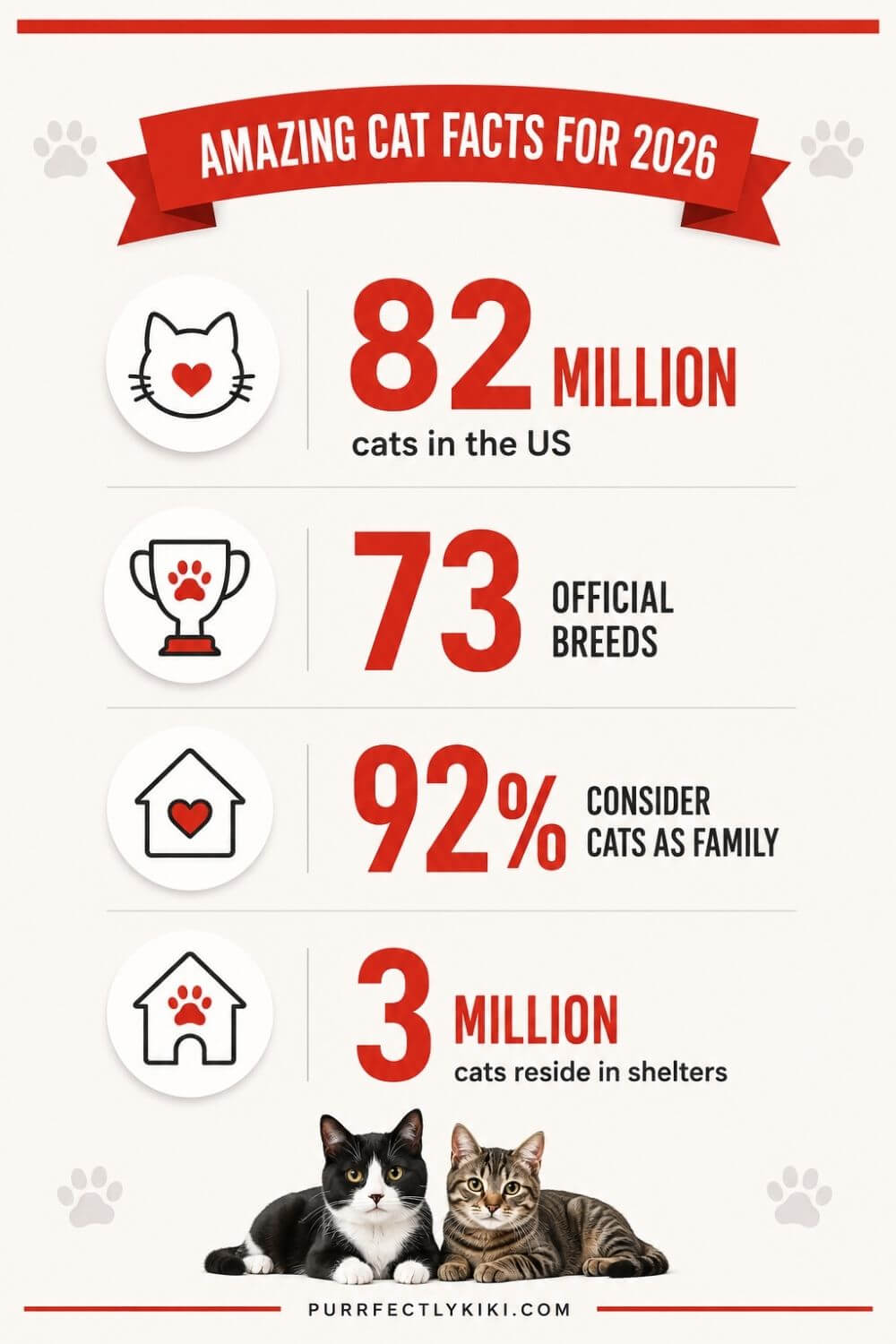
- 82 million cats reside in the US
- There are 73 official cat breeds
- Purr-ents spend $100+ on cat food
- 92% of purr-ents consider cats as family
- 2.1 million cats are adopted from shelters every year
- 3 million shelter cats are waiting for a home
- Indoor cats live longer than outdoor cats
- Cats spend 50% of their waking hours on grooming
What Are The Most Interesting Facts About Cats in the US & Europe?
Let’s start with two of the most busiest continents for cats, the United States and Europe, and how cats have been living here, types of breeds, and other fascinating numbers.
In the US, there are about 82 million cats, while in Europe that number is greater, making it a home to an astonishing 127 million cats.
The best thing about these cat facts is that people are caring for them, leaving food and water at locations where cats roam, and often even taking them to the vet for cleaning or checkups.
1. There are 82 Million Cats in the US
Cat ownership in the United States is massive as every 1 in 3 households owns a cat. We don’t generally like to use the term owners as we prefer to view ourselves as purr-ents, but nevertheless, it’s good to see that so many cats in the US have homes.
What’s more is that many even have more than one. The average cat household has about 2.2 cats, making multi-cat homes a common setting.
For many purr-ents, one cat somehow turns into two, as was also the case with us and our Kiki and Lily.
Source: Alley Cat Allies
2. 32% of Homes in the US Own at Least One Cat
Cats are the most common pet in the US that is housed, with about 49 million households having at least one feline companion.
The most fascinating facts about cats is where they come from. Most cat purr-ents state that they adopt from shelters, friends, rescue organizations, or oftentimes, directly from the street.
This is what happened to us as well, we found Kiki at a dumpster near our building and immediately took her in. Lily, on the other hand, we got her from a friend who rescued her off the street, but couldn’t keep her for long.
Source: AVMA
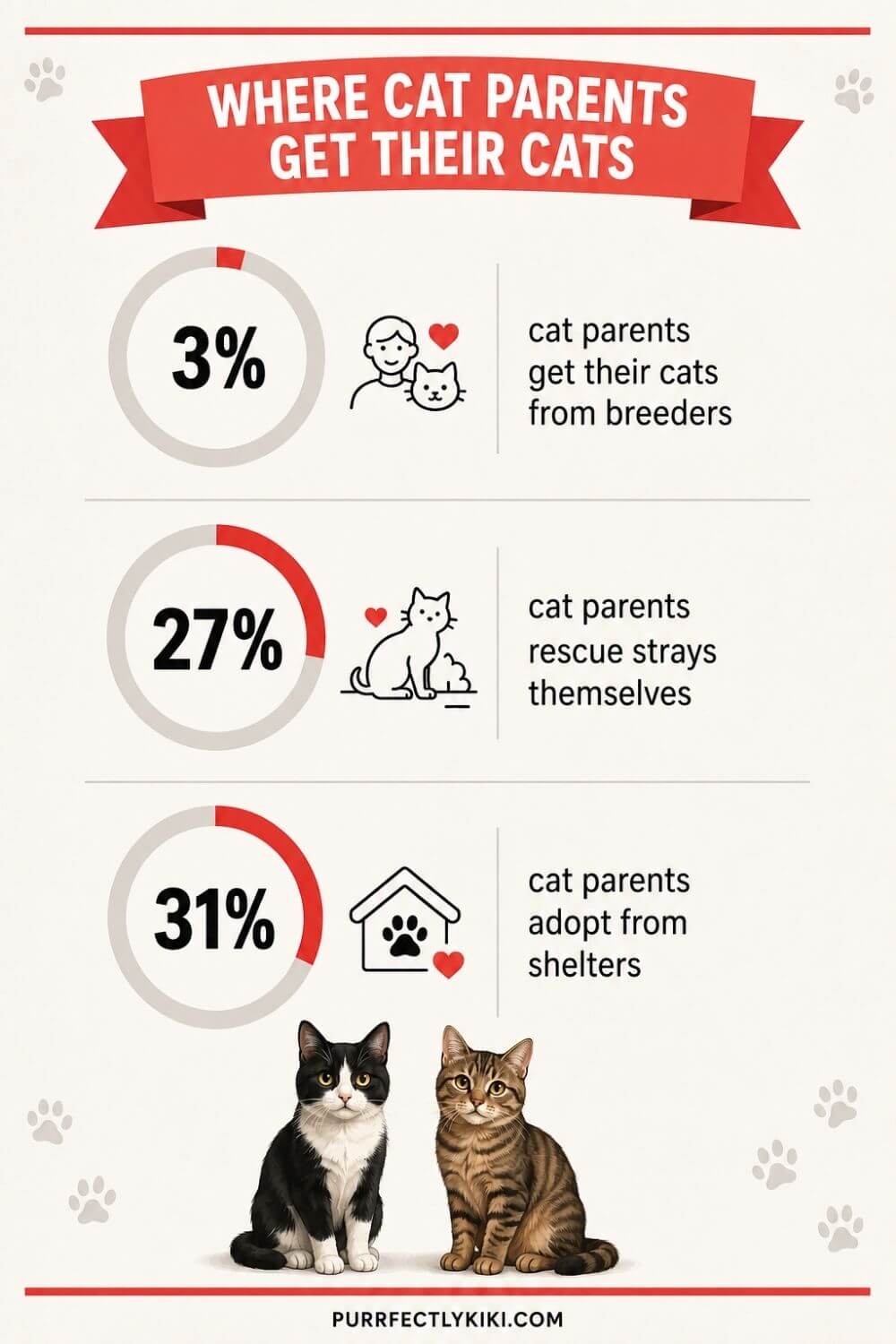
3. Only 3% of US Purr-ents get their Cats from Breeders
Consequently with the previous fact, cats are rarely being purchased from breeders in the US. A large percentage of cat purr-ents adopt from shelters or take stray cats home, with about 27% of them stating they rescue strays themselves.
Moreover, about 31% adopt through shelters or humane societies, adding a bit of pawsitive news for us and for all cat lovers.
The main reason for this is because cats reproduce quickly and are widely available, making them easier and less expensive to keep at home.
Source: Alley Cat
4. TICA Officially Recognizes a Total of 73 Cat Breeds
The International Cat Association currently recognizes 73 official cat breeds for pedigree and championship competition purposes.
These facts about cats show that number continues to grow as breeders develop and introduce new breeds over time, even though this is far from a trending thing. From giant Maine Coons to hairless Sphynx cats, the variety within the cat world is much bigger than most people realize.
However, the fact remains that adopting from the street, a shelter, or a rescue organization is by far the most humane thing a person can do.
Source: TICA
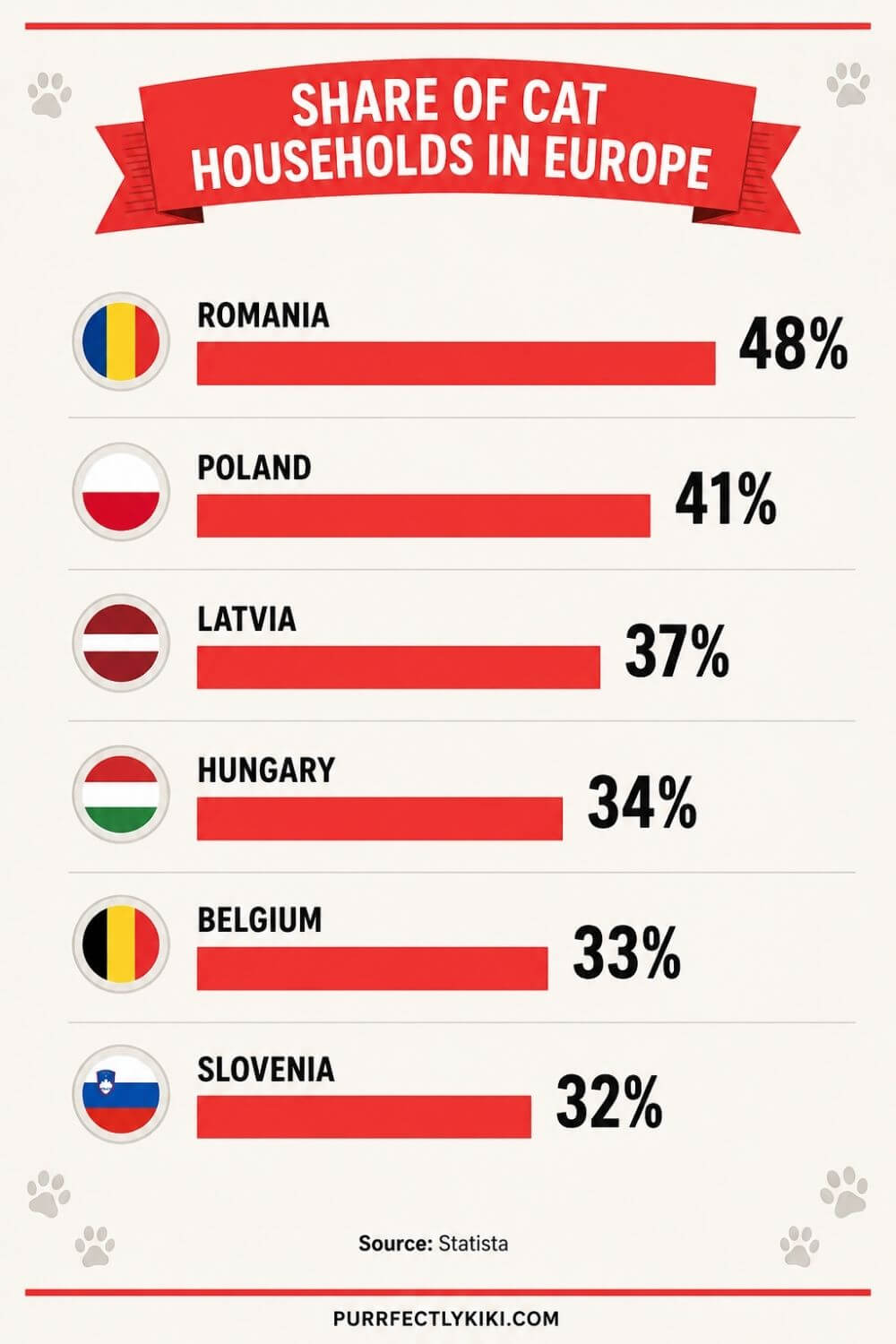
5. Romania has the Highest Cat Ownership Rate in the European Union
Moving slightly into Europe, about 48% of households in Romania own at least one cat. Romania is also one of the most cat-friendly countries in Europe.
That said, the number does not include stray cats, which are estimated to be in the millions, and because of this, European countries invest a lot into spay and neuter efforts to help control the stray cat population.
Source: Statista
Fun Facts About Cats
Now, let’s take a look at the most interesting things to know about our furry babies throughout the world. We’ll also see how certain situations shape the rise in caring for cats and why so many homes are now filled with furry babies.
Let’s start with what happened around the world during the Coronavirus pandemic, because in addition to Air Fryers, people also adopted and rescued pets.
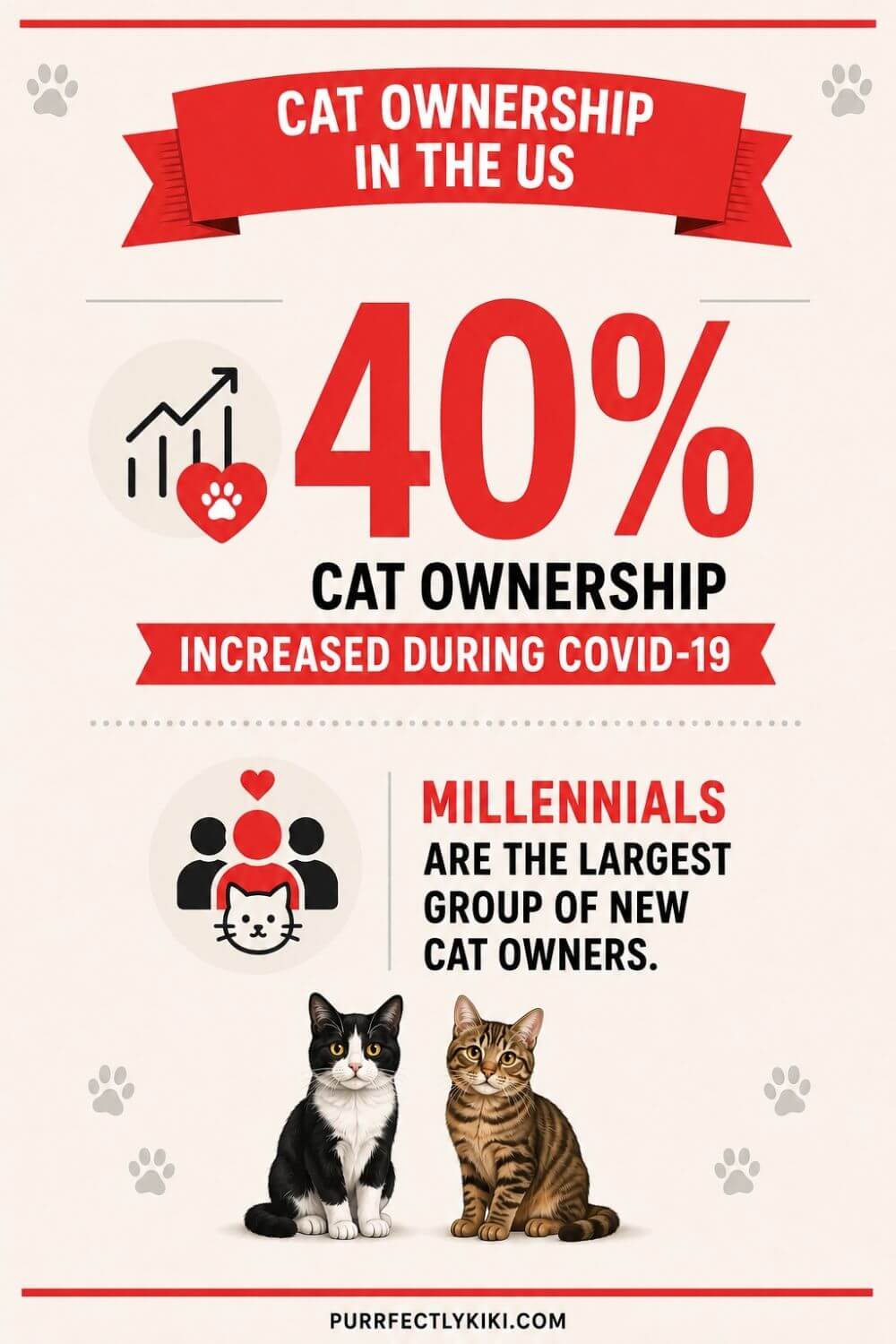
6. Cat Ownership Increased During the COVID-19 Pandemic
The coronavirus pandemic changed a lot of people’s routines, and for many, that included bringing home a cat.
In the US, cat ownership increased by 40% during COVID-19, with millennials being the largest group of new cat owners.
Moreover, nearly half of those new owners were men. For a lot of people who were stuck at home, cats became a source of comfort, companionship, and a steady routine of sorts during an uncertain time for us all.
Source: HumanePro
7. Cat Purr-ents Spend $100+ Each Year on Food Alone
Even though having a cat at home is far cheaper than having a dog, the costs add up over time. The average spend of a cat purr-ent ranges between $120 to $500 per year just on food alone, especially with a picky cat where you would need to carefully choose their cat food.
We don’t even include the pet visits, treats, vaccines, grooming, toys, litter, or emergency care. If we were to account for all of these and include them in the yearly cost, the number would easily climb to $1000 per year.
That is the reality, and while cats may be independent, they are certainly not free, and this is a cost that in our eyes is very well spent!
Source: Purrfectly Kiki
8. There are more than 600 Million Cats Throughout the World
Cats have taken over the planet, that’s a fact!
There are an estimated 600 million cats throughout the world, including strays, pets, and feral cats. These facts about cats reveal that 373 million of those are being kept as household cats, while the number of remaining cats could be even higher.
It is nearly impossible to calculate how many stray and feral cats are there in many parts of the world. We can only hope that the number of people taking care of them increases by the day.
Source: World Population Review
9. About 92% of Purr-ents Consider Cats as Family
For most people, cats are not just animals, they are part of the family. Every 9 in 10 purr-ent says that they consider cats as part of their own family.
Cat purr-ents tend to form a particularly strong and special emotional bond with their cats and they often treat them with the same care, attachment, and attention as close family members.
We are guilty of this too and we do fall into this category as well.
Source: Cats
10. Japan is Famous for Having Entire Islands just for Cats
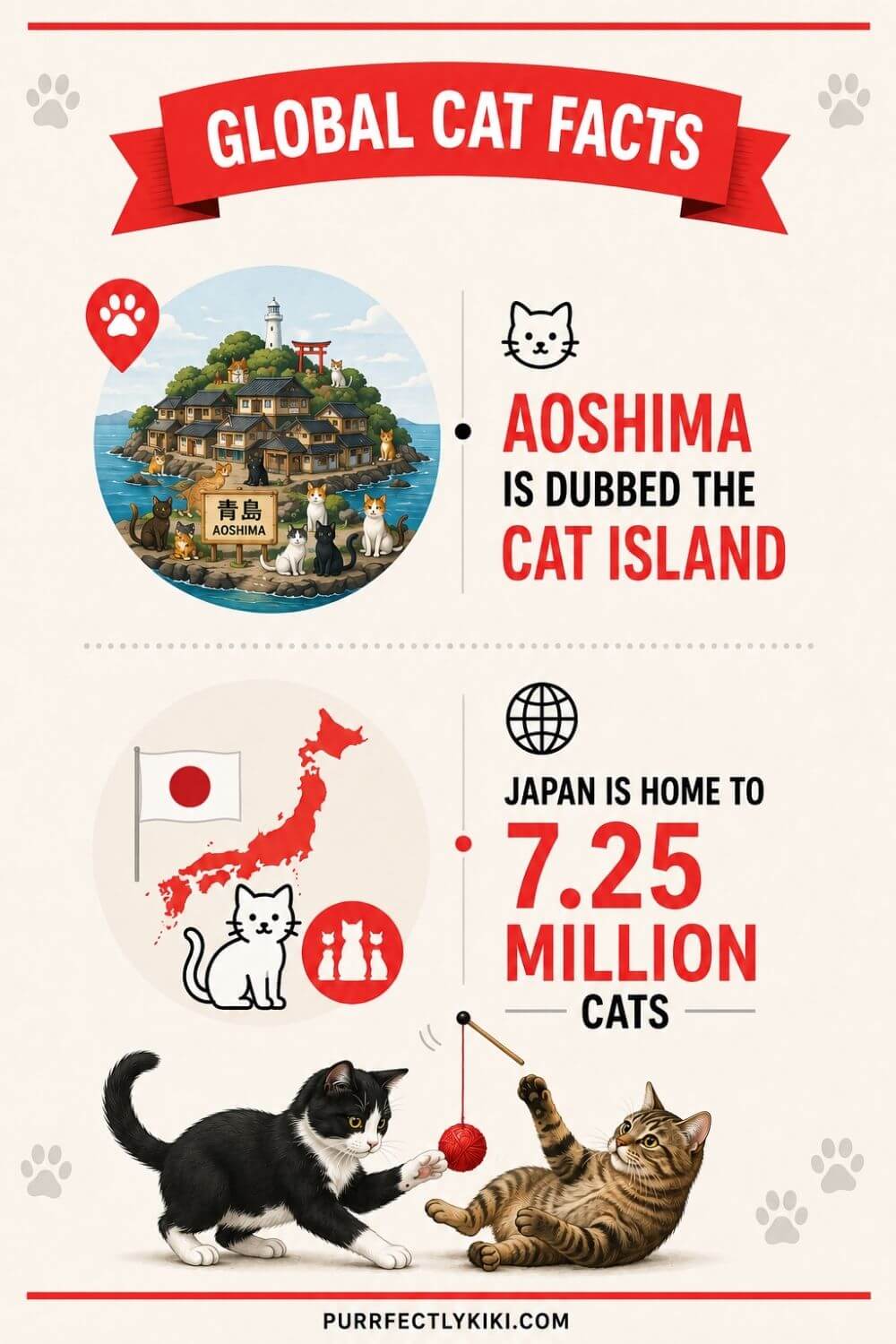
Japan’s love for cats goes beyond cafes and internet culture. One of the most interesting cat facts and examples is the island of Aoshima, or dubbed as the Cat Island.
The cat population on this island massively outnumbers the human population with only less than two dozen people living there, while more than 120 cats roam free on the island.
Additionally, Japan is home to roughly 7.25 million cats and they continue to play a huge role in Japanese culture, entertainment, and everyday life.
Source: HIS USA
How Many Cats Live in Shelters – Shelter Cat Statistics
One of the most pawsitive aspects of caring for cats is that there are thousands of cat shelters around the world. These incredible humans that are operating these shelters do so with so much love and affection that fills our hearts with warmth.
That said, the number of cats finding a home after being in shelters increases daily, with latest reports indicating up to 2.1 million cats find their home.
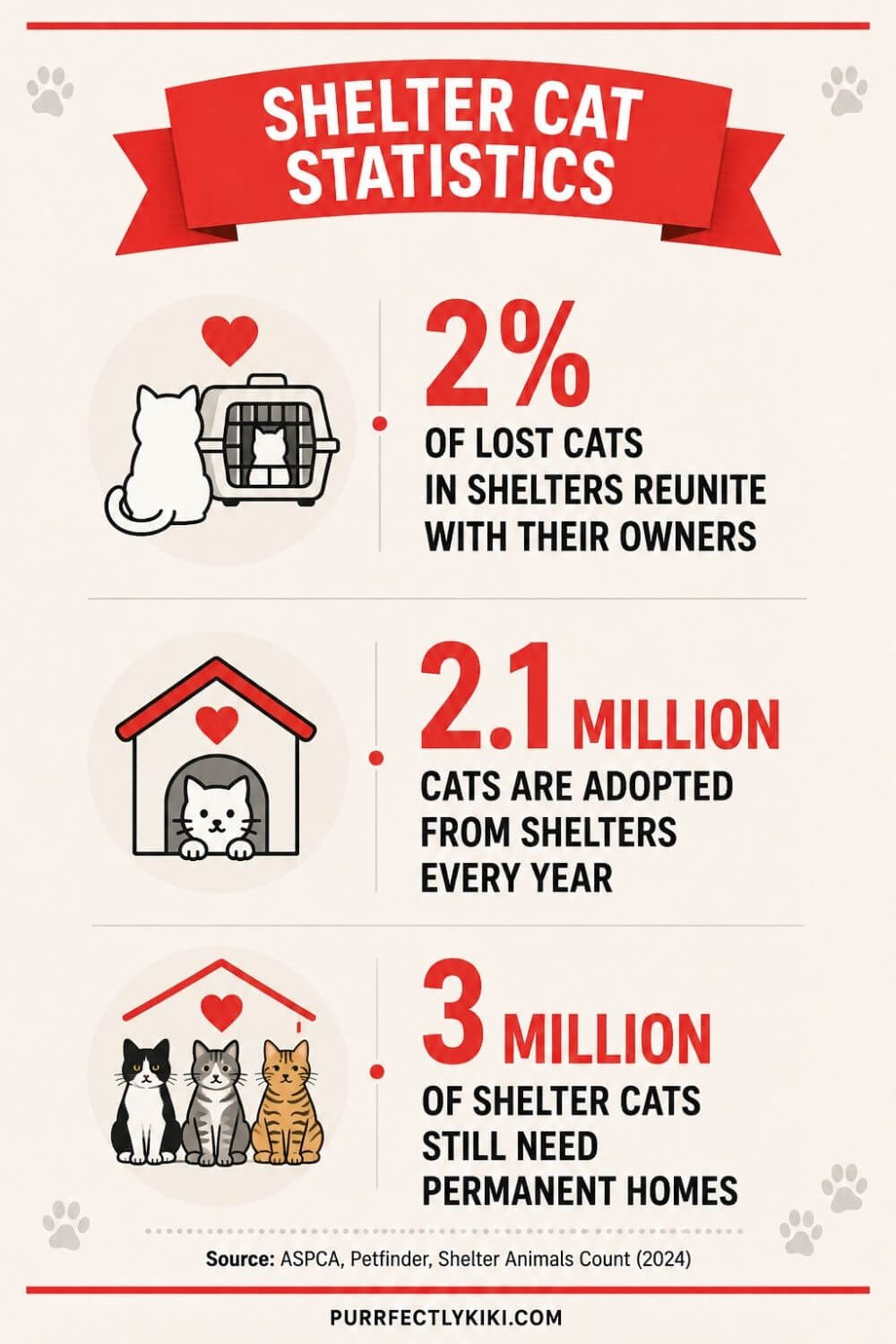
11. Only 2% of Lost Cats in Shelters Reunite With Their Owners
When a cat goes missing, odds are not great that it will return, and this is what petrifies owners. Many cats do manage to find their way back home and usually do so within the first week.
According to the latest cat stats, only 2% of all lost cats that end up in shelters are eventually reunited with their owners. The biggest reason for this is identification.
With that in mind, a microchip and updated contact information can dramatically improve the chances of getting your lost cat back home safely.
Source: EDM Animal Rescue Society
12. Around 2.1 Million Cats Are Adopted From Shelters Every Year
Good news from around the world is that millions of cats find homes through shelters every year.
Awareness has increased in humans over the years, especially around adoption and rescue efforts. Spaying and neutering have also helped to reduce euthanasia rates, but seeing such facts about cats like this just feels our hearts with warmth.
Source: Whisker
13. More Than Half a Million Shelter Cats Are Still Euthanized Each Year
Even with the increased efforts to save as many cats as possible, the number of euthanized cats in shelters still remains painfully high.
About 530,000 cats are euthanized every year as they cannot find a home or have an incurable disease.
While the reality is indeed harsh, ignoring these cat facts won’t make them disappear. So we implore people to take better care of their furry babies and save or adopt as many as they can.
Source: ASPCA
14. Tens of Millions of Cats Still Live on the Streets in the US
Every 6 in 10 cats in the United States live without a permanent home. For domestic cats, life can be pretty brutal on the streets mostly due to diseases, injuries, starvation, harsh weather, and the constant danger of everyday survival.
Even feral cats often depend on people for shelter or food, albeit in an indirect way. For these reasons, programs like the Trap-Neuter-Return (TNR) continue to play a huge role in reducing the stray cat population and preventing more cats from ending up in the same vicious cycle.
Source: PETA
15. Roughly 3 Millions of Shelter Cats Still Need Permanent Homes
Shelter homes for cats take in roughly 3 million cats every year across the US alone.
Even though adoption rates and no-kill rescue efforts have improved over the years, there are still many cats out there that never make it into permanent homes.
The encouraging part, though, is that adoption awareness seems to continue growing as more people get the courage to choose a rescue cat over buying from breeders.
Source: Humane World
Cat Health Facts
A cat’s health and well-being is the biggest concern for all purr-ents and guardians, and these numbers show just how important it is for us to properly take care of our furry babies.
16. Indoor Cats Live Much Longer Than Outdoor Cats
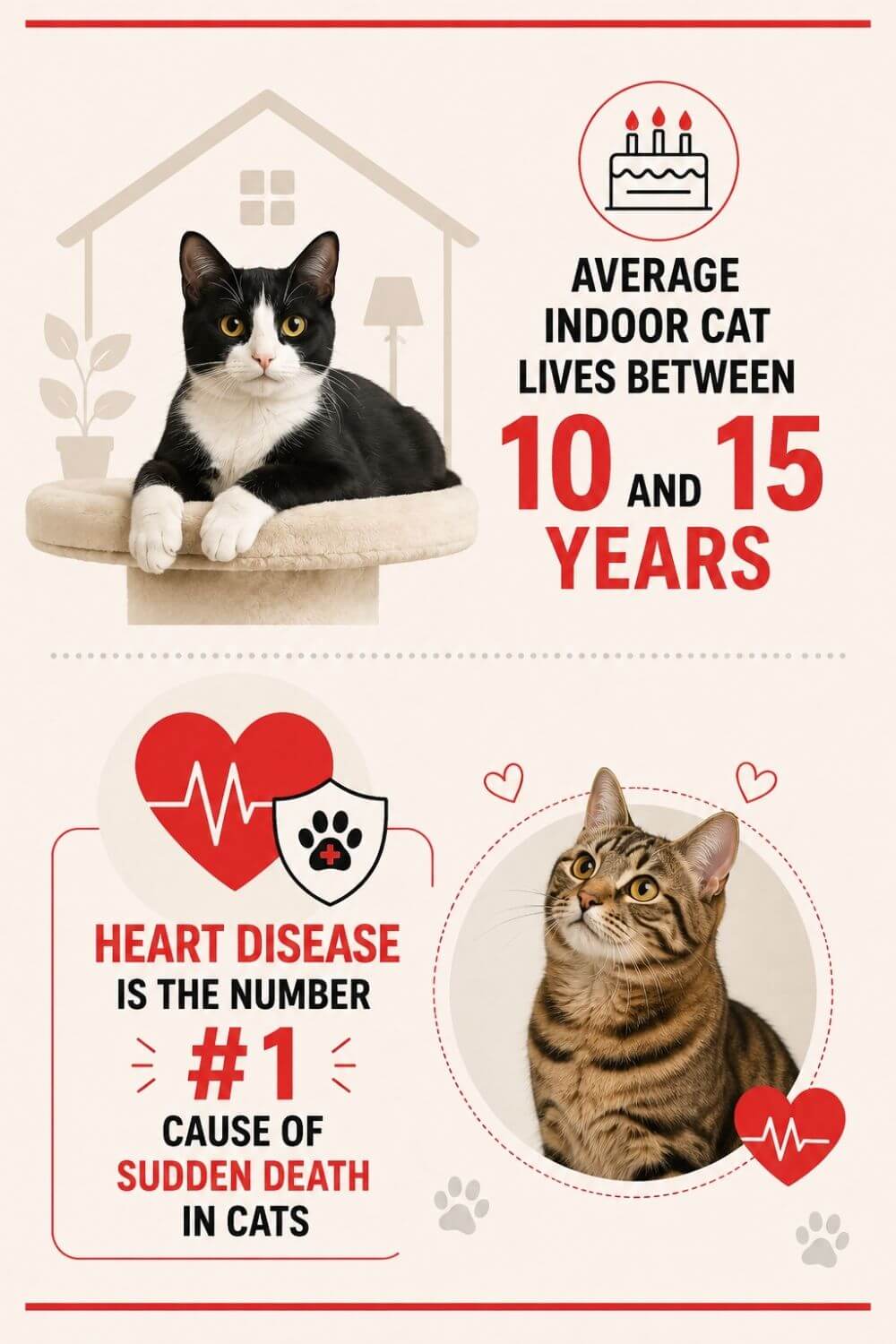
The average indoor cat lives between 10 and 15 years, with reports of many living even longer with proper care.
This is no surprise as outdoor life changes a lot of things. Cats that are outside spend a lot of time unsupervised and face diseases, toxins, traffic, and predators on a daily basis. This can cut life expectancy by half and in many cases, outdoor cats live only for a few years.
Therefore, keeping cats indoors remains one of the best ways to extend their lifespan and quality of life.
Source: Byram
17. Heart Disease is the Leading Cause of Sudden Death in Cats
One of the most dangerous things about heart diseases in cats is that it is silent. Conditions like heartworm disease or feline cardiomyopathy develop without any obvious symptoms.
This means that cats can suddenly collapse without a warning, which is why paying attention to warning signs and having regular vet visits and checkups are so important.
Additionally, make sure your furry baby enjoys good nutrition and routine monitoring since early detection gives them the best chance of staying healthy for longer.
Source: Hero Veterinary
18. Cats Spend up to Half Their Waking Hours Grooming
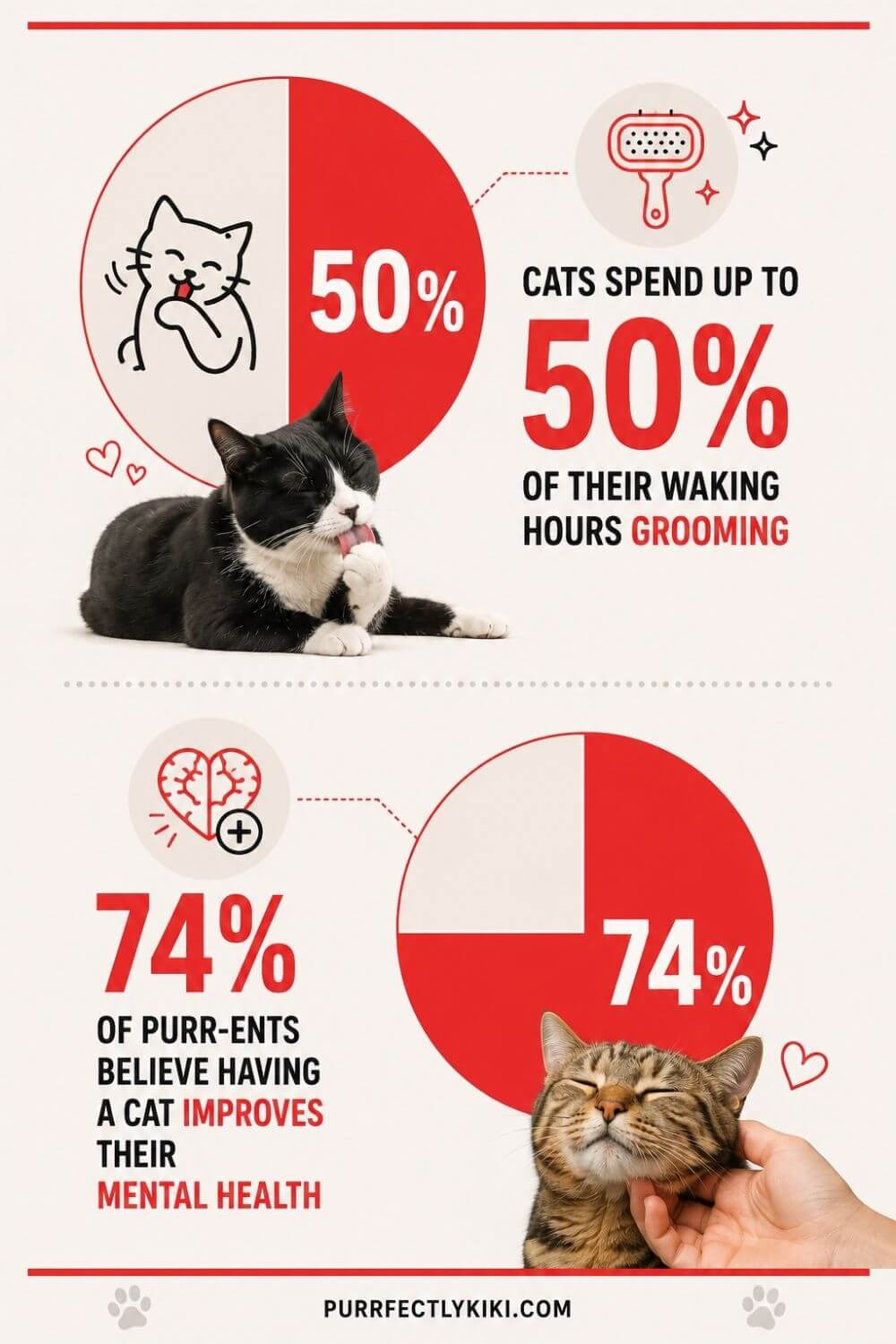
This is one of those cat fun facts that we can see on a daily basis. Cats are self-cleaning machines and spend up to 50% of their waking hours grooming.
However, this is not some pet peeve or OCD-type deal, because grooming helps them regulate their body temperature, keeps their coats clean, and removes loose fur.
It is one of the most normal cat behaviors out there.
However, be wary of excessive grooming, irritated skin, or bald spots, as these are not normal and are a sign of an allergy, stress, parasites, or other medical issues.
Please consult your vet if you notice any of the above-mentioned issues in your cat.
Source: Catster
19. Pet Healthcare Spending Continues to Increase
People are spending more money on pet healthcare than ever before, and cats are a huge part of this growth.
Facts about cats reveal that routine vet visits for cats can average about $182 annually, without including emergency or surgical care.
Even though cats generally cost less medically than dogs, vet bills can still add up fast, especially with chronic conditions or emergencies.
Source: Morgan Stanley
20. Most Purr-ents Believe Cats Improve Mental Health
Millions of people have started to refer to their cats as companions rather than pets. They offer unimaginable emotional support without an official label.
According to the latest surveys, 74% of purr-ents believe having a cat improves their mental health, while more people believe there is a huge positive impact on the well-being of others as well.
Anyone who has ever come home stressed and had a cat quietly curl up beside them already understands why.
Source: Inspira Health
Wrapping Up
Cats are far more complex creatures then they look and these numbers make that fairly obvious. The latest facts about cats, including how many end up in shelters, how they affect our well-being to how long they live, and how often they need care show that they are fully integrated into our way of life.
However, cats are still highly vulnerable, especially when misunderstood or neglected. So, please pay attention, provide proper care, and inform yourself of every choice as that separates a healthy and thriving cat from one that simply gets by.
