

How to Clean a Litter Box – Step-by-Step Guide
To clean a litter box you need the right setup, tools and supplies, and a simple routine so you don’t end up hating the process.
We know that changing your furry baby’s litter box is the least favorite activity. Do know that skipping it should never be an option as a clean litter box keeps your cat comfortable, reduces accidents, and makes your home a lot more livable.
Now, let’s dive into the details and see how best you can approach this least popular task.
How to Clean a Litter Box – Key Takeaways
- If your litter box setup is wrong, cleaning will always feel like a chore no matter what you do
- Skipping daily scooping is the fastest way to cause odors, mess, and litter box avoidance
- Most hidden litter box problems come from buildup that only a proper deep clean can fix
- A simple, consistent routine turns a hated task into something quick, predictable, and easy to manage
Litter Box Choice, Cleaning Supplies & Preparation
To start things off, if your overall setup is bad, you will hate the process. On the other hand, if it is right, it will take only a few minutes, so let’s start with the basics.
You need to get the following things right:
- Litter Box
- Cat Litter
- Location
- Litter Scoop
- Litter Waste Bags
And for deep cleaning:
- Disposable Gloves
- Baking Soda or Deodorizer
- Sponge or Brush
- Dish Soap
- Paper Towels
1. Choose the Right Litter Box
The litter box should be at least as long as your cat from nose to tail, easy to open up and clean, and very sturdy.
Open-top designs are best for kittens and younger adult cats who are not yet grown too big. They offer a better airflow and visibility that allow cats to view their surroundings and pounce quickly once they finish.
Closed-top designs are best for adult cats and senior cats as they provide shelter-like form so they can easily do their business. These types usually come with filters to trap and cover the smell.
In any case, one of the best ways to clean a litter box is to pick a non-stick base. These can make your life easier, though first ensure that your cat won’t avoid the box.
2. Choose the Right Cat Litter
This part is equally important as there are cats that like scented litter while others prefer unscented. Cats usually don’t like heavily perfumed litter, so make sure to avoid it and go for options like corn, cassava, or tofu since these are easier to clean.
We found out that our Kiki and Lily like lightly scented litter, so we make sure to get Lavender scented litter with small particles and mix it with a non-scented normal-sized granules litter for best effect. Their poop and pee form into solid clumps, which makes it very easy for us to scoop up and clean.
3. Pick the Right Location
Location is extremely important for cats so they can often use the litter box and not break away from their habits. Make sure to put the litter box in a quiet and low-traffic area of your room where your furry baby can access it all the time. This can help you to easily clean the litter box due to access to your tools and waste disposal units.
Additionally, if you can create an enclosed drawer where the litter box will be hidden from plain sight but easy to access, that would be the most ideal scenario for your cat. Most importantly, keep the litter box away from your cat’s food and sleeping spots.
4. Get Your Cleaning Setup Ready
Now, the next things you need to prepare are your supplies and tools to use for cleaning the litter box. Make sure to have everything within reach and this is why an enclosed litter box drawer is a fantastic choice.
With that in mind, make sure to have the following:
- A sturdy litter scoop with tight slots that catch clumps but let clean litter fall through
- Waste bags or a small trash bag for quick disposal
- A covered trash can nearby to control odor
- Fresh litter for topping up
- Disposable gloves if you want go for a deep clean
- Baking soda or deodorizer for odor control
- A dedicated sponge or brush just for the litter box
- Dish soap and paper towels or a towel for deeper cleaning
🐾 Even though many would say that you can flush down some types of litter, we would recommend not doing this as it is not safe everywhere or with the type of litter you use. Our suggestion would be to use waste bags and a covered trash can where you can put the litter after cleaning.
How to Clean a Litter Box Daily
At minimum, you should be cleaning your litter box at least once a day. Cats prefer a clean space and if the box gets too dirty, they might avoid it.
To go one step further, you can even create a routine of cleaning it at the same period. This will go hand-in-hand with your cat’s habits as they love to have everything in order at any point in the day.
Moreover, daily scooping keeps the odor under control, so your home doesn’t end up smelling like a litter box.
How you scoop depends on the type of litter you’re using:
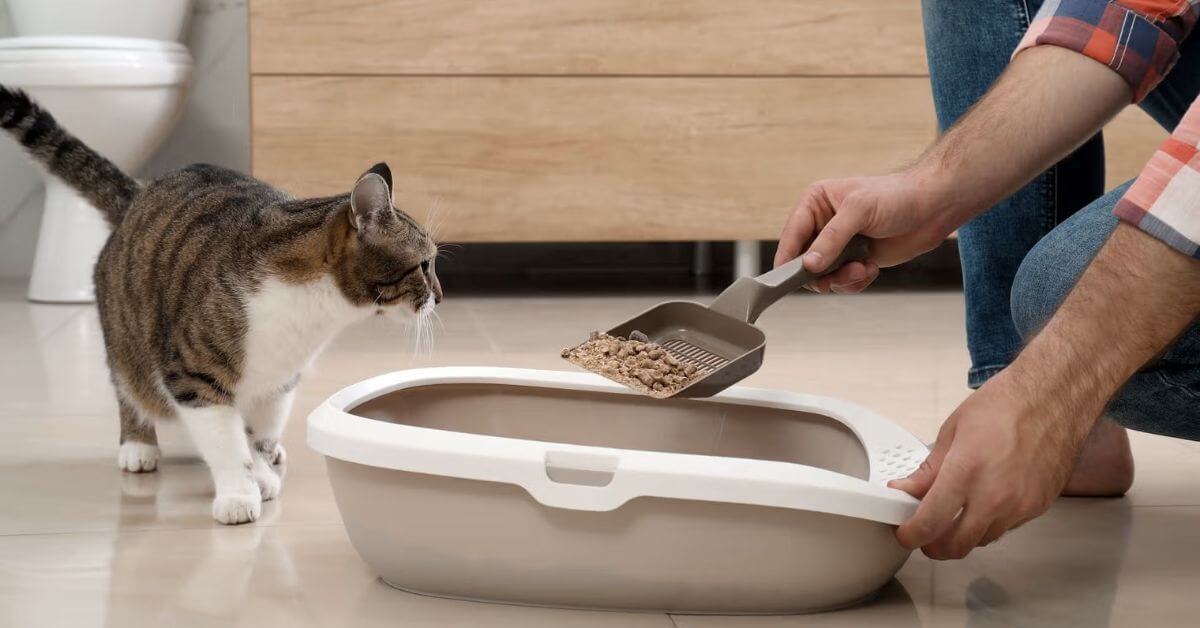
- Clumping Litter – remove solid waste and clumps, making sure to scoop all the way to the bottom. Give the scoop a light shake so clean litter falls back in and nothing gets wasted.
- Non-Clumping Litter – remove solid waste, then stir the remaining litter so it can absorb moisture more evenly.
- Wood Pellets (with a sifting box) – scoop solids and stir the pellets so wet ones break down into sawdust. Every few days, give the box a shake to help the sawdust fall through.
Once you’re done, seal the waste in a bag and toss it in a covered trash can. Then wash your hand thoroughly every single time.
How to Deep Clean a Litter Box
Deep cleaning is something that should happen once a month, so think of it as a full reset. This means dumping everything, getting rid of built-up odors, leftover residue, and anything that daily scoops miss.
Starting a fresh process looks like this:
- Empty all the litter into a trash bag
- Scrape off any stuck residue
- Wipe out loose dust with a damp paper towel
- Wash the box with hot water and a small amount of mild, unscented soap
- Rinse thoroughly and let it dry completely
- Refill with about 3 to 4 inches of fresh litter
- Change filters if you use closed-top litter boxes
A step-by-step process will look like this:
Step #1 – Scoop the Waste
First, remove all clumps and solid waste using a scoop and toss everything into a bag. Scrape everything off the base and the sides of the litter box, then add a layer of baking soda to help control the odor.
Step #2 – Wash the Box
Next, empty the litter completely and rinse the box with hot water. This alone will do most of the work, though for a deeper clean, add a small amount of dish soap and scrub the base and the sides of the box. Feel free to add vinegar to deal with lingering smells or bacteria, just make sure not to overdo it.
Step #3 – Dry and Refill
Lastly, dry the box with paper towels and make sure to throw away everything you use, sealed in a waste bag, and into another sturdier disposable bag. Then, sprinkle a little soda on the bottom and refill the litter box with new clean litter.
Bonus Tip – Litter Box Cleaning Hacks
Here’s a quick tip – skip harsh chemicals and heavily scented cleaners as these leave smells behind that your cat won’t like or tolerate. Keep it simple, especially if you’re dealing with lingering odors or some stubborn stains.
Cleaning the inside of a litter box is one thing, but cleaning everything around is another. Cats naturally track litter on their paws when they exit the litter box or when they kick it out when digging, so they might leave trails outside of the box.
Here’s what actually helps when this happens:
- Add a Litter Mat – a good mat catches loose litter before it spreads across your floor
- Keep Cleaning Tools Nearby – even with the best setup, you’ll still need to sweep or vacuum regularly
- Use Low-Tracking Litter – pellet or low-dust options tend to stay in the box better
- Choose the Right Box – high-sided boxes help contain scatter, while covered or top-entry boxes can reduce mess but aren’t always comfortable for every cat
Wrapping Up
A clean litter box shapes your cat’s comfort, overall health and hygiene, and behavior. So when the setup is right and the routine is consistent, you will spend less time dealing with bad odors, accidents, or unnecessary stress.
Moreover, your cat will stay relaxed, predictable, and very easy to manage. This is one of those small habits that pays off every single day, for both you and your cat.
We hope this article was helpful and assists you in how to clean the litter box with ease.
Happy cleaning!
