

Kitten Food vs Adult Cat Food – 2 Major Differences
As a fellow cat lover and proud purr-ent of Kiki, I know firsthand how much we all care for our furry babies. They’re our family and we always want what’s best for them, starting from their food.
Kittens and adult cats have different nutritional needs, just like us humans, so they can grow strong and be healthy. This is why knowing the differences between kitten and adult cat food is the most important step to keep their health and well-being optimal, achieving happiness and growth in the process.
Kitten Food vs Adult Cat Food – Key Takeaways
- Kittens need food that is high in protein and fat, with extra minerals, vitamins, DHA, calcium, and antioxidants
- Adult cats require more protein-based food with balanced nutrients for weight management and muscle mass support
- Transition to adult food gradually to avoid digestive issues and to adjust portions based on your cat
- Senior cats need lots of hydration and fewer calories, so foods high in fiber, moisture, and joint-friendly nutrients are best
What Is The Main Difference Between Kitten and Adult Cat Food?
The main difference between kitten and adult cat food is that kitten food is specifically tailored to ensure optimal growth of their bones, muscles, organs, and the body as a whole. Adult cat food, on the other hand, is tailored to further upgrade and improve their structure and muscle mass.
Kitten cat food is rich in minerals, vitamins, and nutrients essential for growth, while adult cat food is filled with protein as adult cats are in a period of their lives when they need to hunt to survive.
Let’s dive a bit deeper and take a look at differences between young and adult cat food.
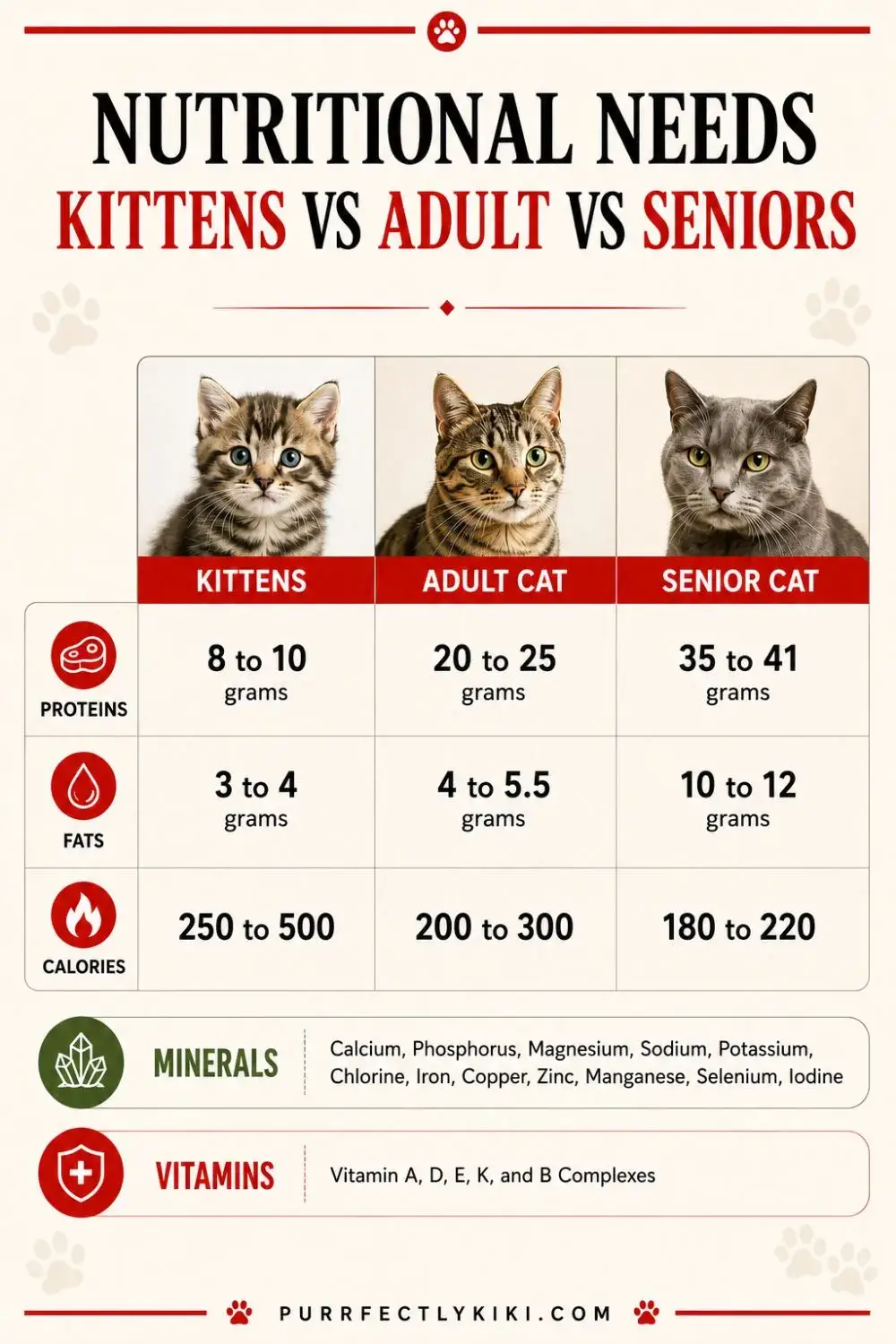
Nutritional Needs of Kittens vs Adult vs Senior Cats – Chart
| Kittens | Adult Cat | Senior Cat | |
|---|---|---|---|
| Proteins | 8 to 10 grams | 20 to 25 grams | 35 to 41 grams |
| Fats | 3 to 4 grams | 4 to 5-5 grams | 10 to 12 grams |
| Calories | 250 to 500 | 200 to 300 | 180 to 220 |
| Minerals | Calcium, Phosphorus, Magnesium, Sodium, Potassium, Chlorine, Iron, Copper, Zinc, Manganese, Selenium, Iodine |
| Vitamins | Vitamin A, D, E, K, and B Complexes |
These are the basic nutritional needs for cats at different life-stages. Now, let’s see the importance of feeding kittens with specific types of cat food, what to do when moving onto adult cat food, and finally, see what senior cats require on a daily basis.
1) Why Kittens Need a Special Menu
Do you remember the first time you brought a kitten home? All those tiny little paws and endless energy around the home!
Kittens are in a rapid growth phase and this means they need food that is packed with the right nutrients to support the development of their bones, muscles, and brain. Imagine it like this – kitten food is like a power packed smoothie that is rich in fats and protein to help them grow strong and fuel their high octane adventures.
However, it is not just about energy as kitten food is often reinforced with a lot of minerals and vitamins, such as DHA omega-3 fatty acid for brain development and phosphorus and calcium for those little teeth and bones.
Since kittens are still building up their immune system, the food they should consume needs to contain antioxidants to help fend off those nasty bugs they might encounter. The goal is to give them the best possible start to life so they can pounce, leap, and explore as much as they desire.
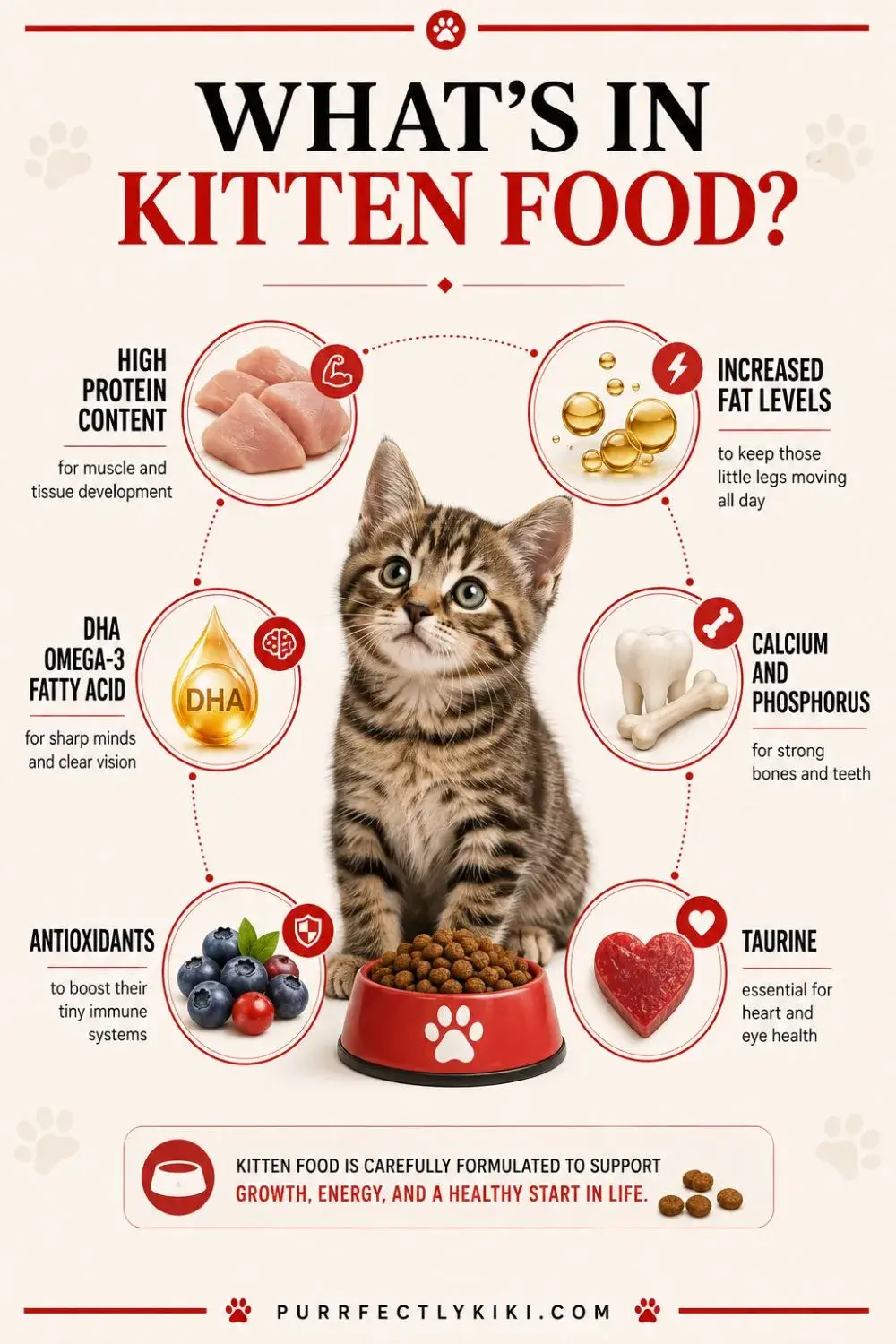
Here’s a quick look at what’s in kitten food and why it matters:
- High Protein Content – for muscle and tissue development
- Increased Fat Levels -to keep those little legs moving all day
- DHA Omega-3 Fatty Acid – for sharp minds and clear vision
- Calcium and Phosphorus – for strong bones and teeth
- Antioxidants – to boost their tiny immune systems
- Taurine – essential for heart and eye health
2) When to Move Onto Adult Cat Food
As your kitten approaches one year old, it is time to think about transitioning to adult cat food. To do so, make sure to always choose the right cat food for optimal growth and well-being.
However, it is important to not rush the process and ensure the switch is done slowly to avoid any tummy troubles.
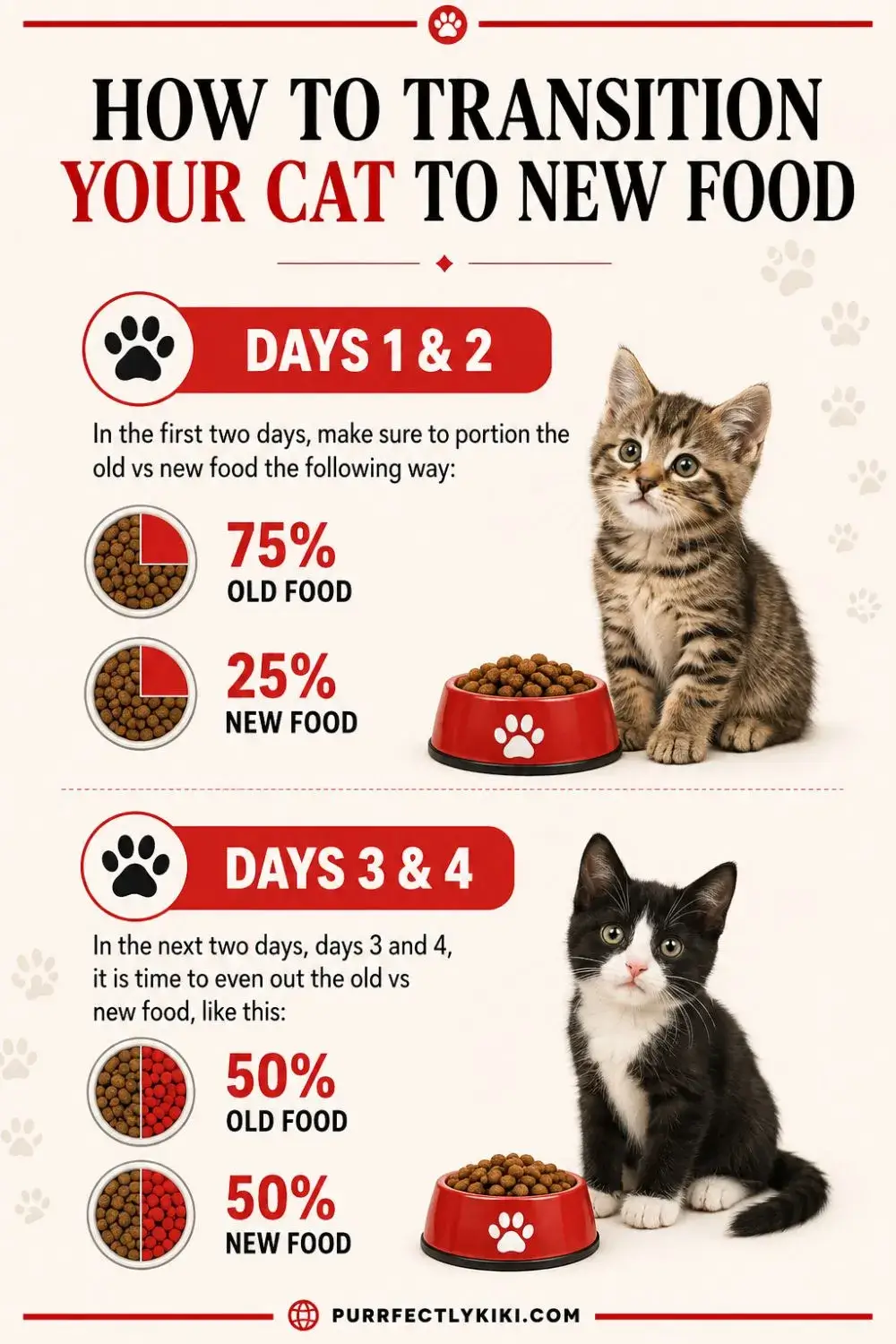
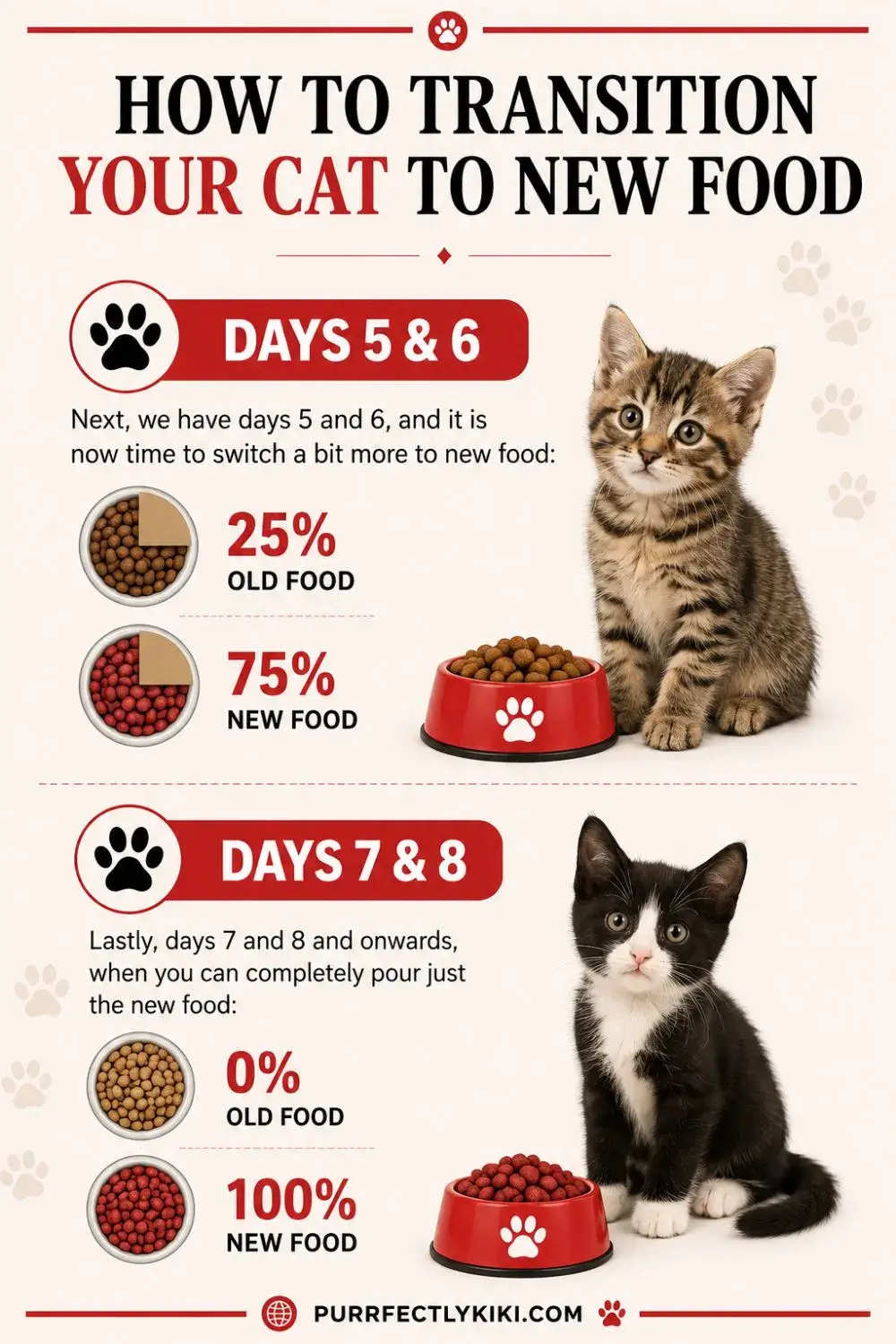
Start off by portioning the sizes of the old food vs the new food in a 75% to 25% ratio. Then switch to a 50-50% ratio, and slowly move onto an opposite ratio of 25% old food vs 75% new food.
After this, you can easily give only adult cat food to your furry baby. Keep in mind, though, that there isn’t a one-size-fits-all. So, always be sure to check how your cat reacts to the new food. You can always mix the old and new food together and see how your kitty responds to it, both in their palate and their toilet.
🐾 Take into account if your cat is spayed or neutered as it can affect their metabolism and appetite. That said, choose adult cat food that would support weight management and prevent those extra pounds from piling on.
Bonus Point – Senior Cat Food Difference in Diet & Needs
Our purry friends might not show it, but as they age and get around 7 years old and older, their needs for food change again.
Senior cats often slow down as they age, which means they need fewer calories and more support for their digestion and joints. Food high in fiber and low in fat can keep them at a healthy weight and aid in their digestion. Besides, you would want to look for foods with joint-supporting nutrients, such as chondroitin and glucosamine, especially if your cat shows signs of arthritis.
Moreover, as cats age, they also need extra levels of hydration. Many senior cat foods include high moisture content to aid with this, or food that is specifically designed to encourage more water intake. That said, keep an eye out on their water intake to help them prevent any issues like kidney disease.
🐾 If your senior cat becomes a bit picky about their food, this might be due to changes in their smell or taste. When this happens, opt for food that’s very tasty and has a stronger aroma that would make mealtime more appealing.
Final Remarks
Feeding your furry little baby is a true act of love! When you choose the right food for their needs and age, you keep them healthy, energized, and make sure they are happy and thriving at every possible stage of their life.
A little extra care with their diet goes a long way, regardless if it’s a kitten, adult, or senior cat. Lastly, always check in and communicate with your vet to ensure you are on the right track as your cat deserves the very best, just like you do.
